Family Owned for over 45 years
 Fully covered Plant area
 Open 7 Days a week
 Café serving Breakfast, Lunch & afternoon Tea
 Nationwide Delivery

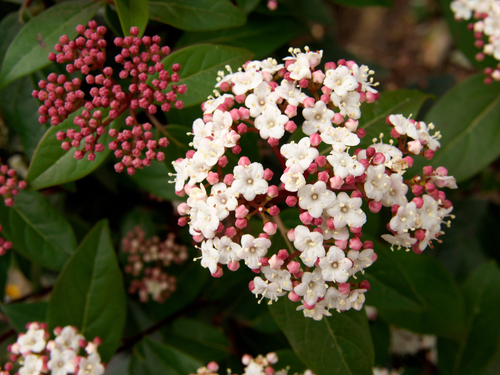
The Laurustinus is also known as viburnum and looks great in English gardens. This wonderfully fragrant shrub blooms in winter and early spring, offering a welcome change when there is less greenery in your garden. Our plant experts have gathered their best tips to help you care for your laurustinus.
Tip 1: Creating the perfect soil foundation
The soil in which the Viburnum will be planted is an important foundation. It prefers an acidic and humus-rich soil. You can easily achieve this by mixing some compost into the planting hole. Premium compost and soil amendments can be found in our garden centre's soil department, so you are always welcome for a visit.
Tip 2: The right post-planting watering schedule
The laurustinus loves a little extra water in the weeks following planting. It will feel at home quicker. Do not forget to water it during dry periods as well.
Tip 3: Natural pestering defences
Nobody likes to be pestered and neither does the laurustinus. It can sometimes be susceptible to greenflies or caterpillars. Ladybirds are a great way to get rid of greenflies. Caterpillars dislike the smell of chives and sage, so feel free to plant these herbs near your Viburnum.
Tip 4: Finding its favourite spot
This beauty likes to be in the spotlight, and in this instance we can take it literally. A sunlit location is ideal.
Tip 5: When (and when not) to prune
Actually, this garden plant does not need pruning. If you do want to keep it under control, the best time to prune it is after it has flowered, in the spring. That way, there is no risk of pruning buds. For the best gardening tools for this job, you are always welcome to ask our experienced staff for advice.
The 1 mistake to avoid: Pruning in autumn
Because Laurustinus blooms in winter and early spring, the biggest mistake gardeners make is treating it like a summer-flowering shrub and pruning it in late summer or autumn. Doing this cuts off all the buds that are preparing to flower! Always wait until late spring (after it has completely finished flowering) to do any trimming.
Keep your garden thriving all winter
Even when the garden seems to be ‘sleeping’, there is plenty of life to cultivate. If you are looking for greenery and flowers in times when your garden looks a bit dull, our experts are here to help you select the perfect resilient plants.